Leaving your dog at home instead of boarding: how to decide
The right answer depends on your specific animal, not on which option sounds kinder.
September 1, 2026 · 3 min read
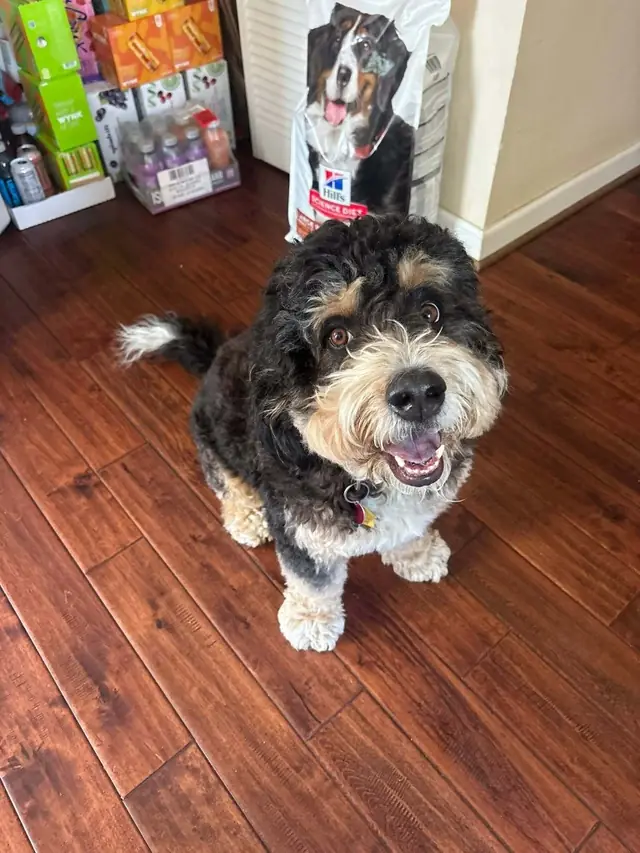
People usually arrive at this question about ten days before a trip, already feeling guilty, and looking for permission to pick whichever option they were leaning toward anyway. That is a bad way to decide. The honest version is that boarding suits some animals and in-home care suits others, and the deciding factor is almost never the length of the trip. It is what your particular animal does when its routine breaks.
Start with what happens when the house empties
Watch your dog on an ordinary Tuesday. Not on the day you leave with suitcases out, which is its own kind of stress, but on a normal day when you go to work. Does he settle within twenty minutes, or does he pace? Is there anything chewed when you get back? Does the water bowl go untouched all day? A dog who settles is a dog who will do fine with scheduled visits. A dog who does not settle is telling you something that no amount of good intentions will override.
Cats are a different calculation and usually a simpler one. Most cats do markedly better at home. A cat who would spend a week hiding at the back of a boarding run will barely register that anything changed if someone comes in twice a day, keeps the litter clean and the food coming. The exception is a cat on complex medication, or one who genuinely stops eating when the household changes. Those need more eyes on them than a drop-in gives.
Things people weigh that do not actually matter much
- Trip length. A nervous dog is nervous on night one, not night six. A settled dog is fine on night ten.
- Guilt. It is not evidence. It tells you about your week, not about your animal's.
- What worked for a friend's dog. Their dog is not your dog, and the difference is the whole question.
- Price parity. These two options rarely cost the same, but cost should break a tie, not make the decision.
Things that genuinely do matter
Medication is the big one. If a missed dose has real consequences, say so plainly to whoever you book and make them tell you honestly whether the schedule you have in mind covers it. Two visits a day is not the same as someone in the house, and a good sitter will tell you which one your situation needs rather than selling you the cheaper one.
Medication timing is the other one people underestimate. A cat on twice-daily insulin and a dog on a midday tablet are not the same booking as a settled adult who only needs one evening visit. Say plainly what happens if a dose is missed, and make whoever you book tell you honestly whether the schedule you have in mind actually covers it.
The test that settles most cases
Book a meet-and-greet and watch the first ten minutes. A sitter worth using will spend that time asking about the animal rather than talking about the service: what he does at night, what he will not eat, where he hides during a thunderstorm, who your vet is. If nobody asks you those questions, that is your answer, and it does not matter which option they were selling.
If you want to talk through which one fits your household, call Furry Friends Virginia at (571) 389-4369. If the answer is boarding, we will say so.
Furry Friends Virginia, (571) 389-4369
Call (571) 389-4369